
The Emergency Call From a Grandchild Who Is Not Your Grandchild
Family-emergency scams work because love reacts faster than doubt. A family code word and one verification habit take the weapon away.

Tracks confusing benefit language, Medicare ads, home-safety offers, call-center claims, and consumer-safety red flags.
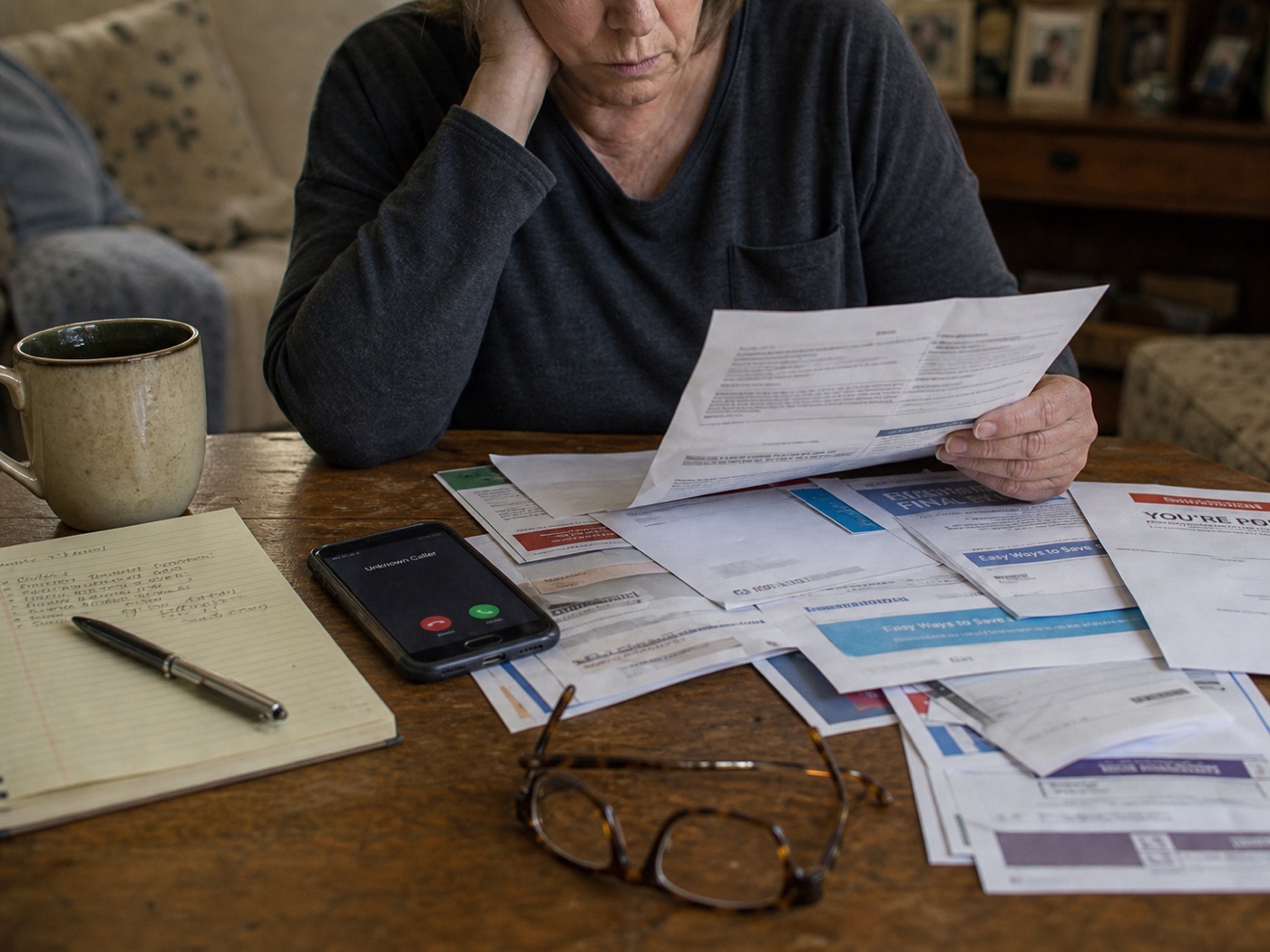
How the call unfolds
Someone calls crying or on a bad connection: a grandchild in a crash, a jail cell, a foreign hospital. A second voice — a “lawyer” or “officer” — takes over with instructions: send money now, tell no one, this must stay quiet. Urgency and secrecy are the two load-bearing walls of the scam.
Voice cloning raises the stakes, not the defense
Consumer protection agencies warn that short audio clips from social media can be used to imitate a family member’s voice. The defense does not change: verification beats recognition. A voice that sounds right is no longer proof of anything.
Love reacts faster than doubt. The scam is engineered around that.
Set up the two-step family habit now
Agree on a family code word that would never appear on social media. Then adopt the rule: any urgent money request gets verified by calling the person back on their known number, or calling another family member, before anything moves. Real emergencies survive a ten-minute verification. Scams do not.
- Pick a code word and share it only within the family.
- Always call back on a known number — never the number that called.
- Treat secrecy demands as the confession they are.
If money already moved
Call the bank or card issuer immediately — speed matters for freezing transfers. Then report to the FTC and, for internet-based versions, the FBI’s IC3. Shame keeps these crimes underreported, which is exactly what the operators count on.
Where to verify this yourself
These official and consumer-protection sources cover the programs and rules discussed above. Rules change, so check the current version before acting.
Was this checklist useful?
One anonymous answer per reader. Results guide the editorial desk and are not displayed publicly until enough real votes exist.