
The Social Security Call That Is Not Social Security
Impersonation scams open with fear: a suspended number, a warrant, a frozen benefit. The real agency does not operate that way, and knowing three facts defuses the script.

Tracks confusing benefit language, Medicare ads, home-safety offers, call-center claims, and consumer-safety red flags.
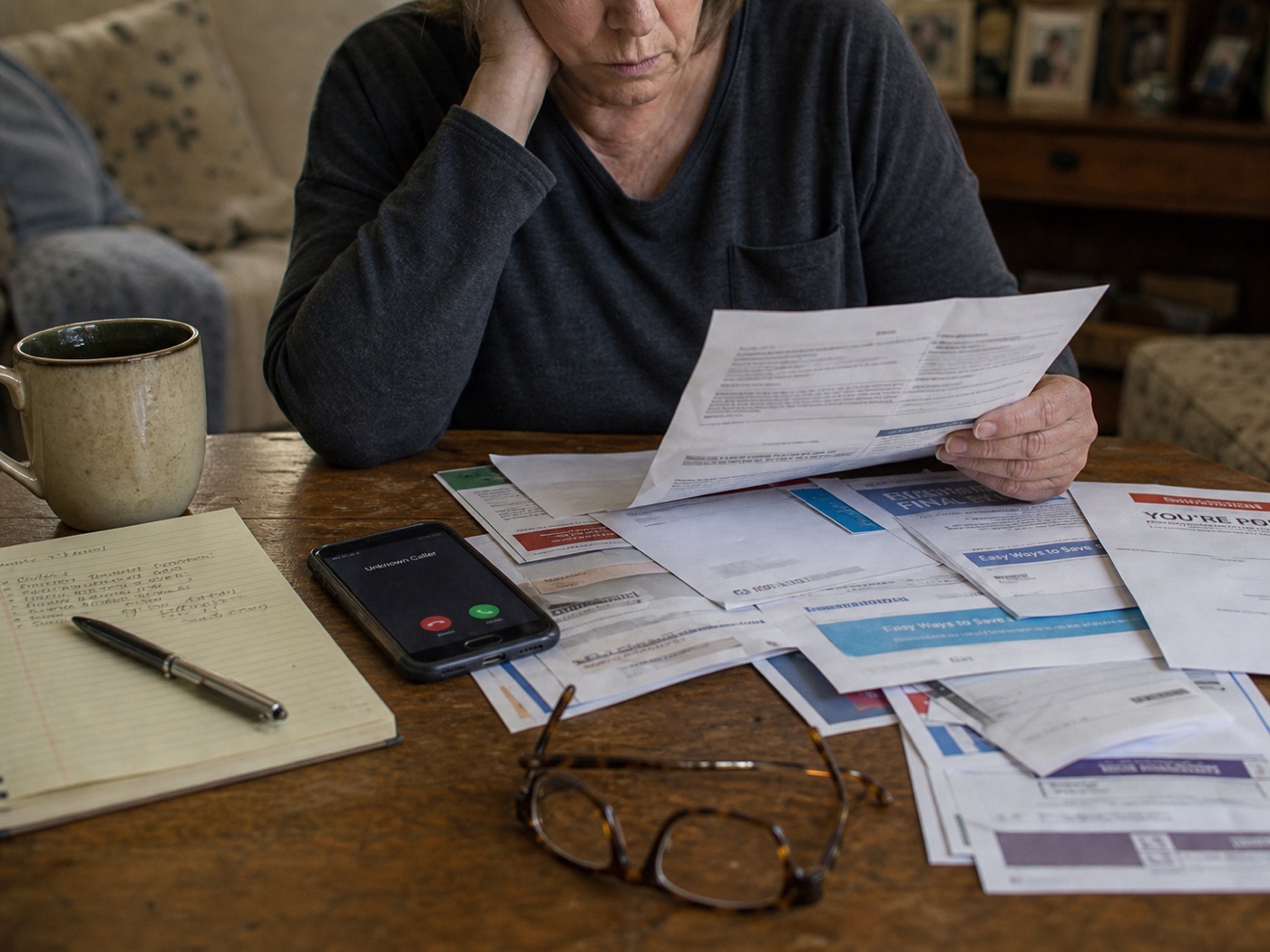
The script, in one paragraph
A call, text, or email claims your Social Security number is suspended, linked to a crime, or about to lose benefits — unless you verify information, move money to a “safe” account, or buy gift cards. Caller ID may show a real agency number. Every element is designed to create panic and secrecy.
Three facts that expose it
First: Social Security does not suspend numbers. Second: no government agency demands payment by gift card, wire, cryptocurrency, or cash in the mail. Third: real agency letters arrive by mail before anything dramatic happens by phone. Any one of these breaks the script.
- No agency threatens arrest over the phone for a benefits issue.
- No agency takes gift cards, crypto, or wire transfers as payment.
- Pressure for secrecy — “do not tell your family” — is itself the tell.
Fear is the product. The script needs you to act before you think.
What to do mid-call
Hang up. Not politely, not after explaining — just hang up. If there is any doubt about your actual benefits, look up the agency’s published number yourself and call it directly. Never call back a number the caller provided or press a key to “speak with an agent.”
Report it, even if no money moved
Reports go to the Social Security Office of the Inspector General and the FTC. Reporting feels pointless after a near miss, but the patterns in those reports are what get phone routes and payment channels shut down.
Where to verify this yourself
These official and consumer-protection sources cover the programs and rules discussed above. Rules change, so check the current version before acting.
Was this checklist useful?
One anonymous answer per reader. Results guide the editorial desk and are not displayed publicly until enough real votes exist.